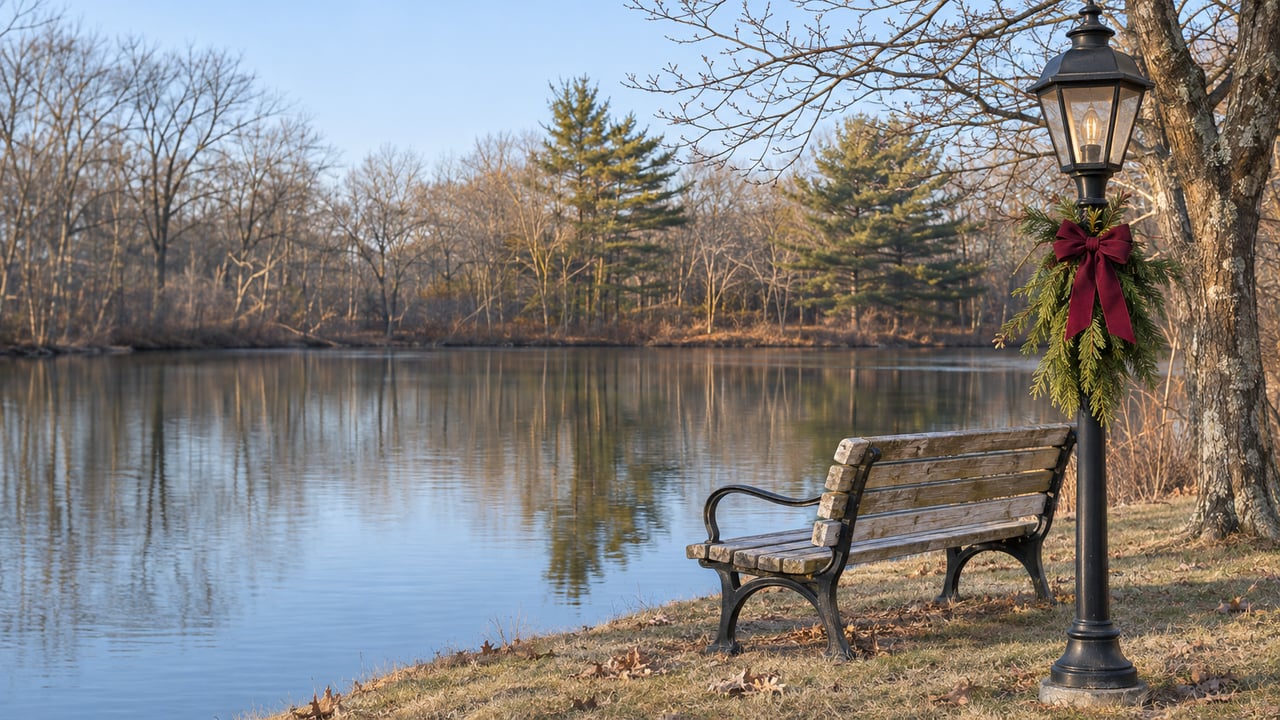
Walk the paved trail along the top of Great Esker Park on an ordinary afternoon and you will see a wide ridge covered in oak and cedar, a marsh spreading out toward the Back River, and maybe an osprey circling one of the nest platforms near the water. What you probably will not see, even if you have walked this trail a hundred times, is the one feature that gave a side path its name: the reversing falls. That's not because the falls are hard to find. It's because they only run on the tide's schedule, and most visitors show up on their own.
Great Esker Park sits on 237 acres along the Weymouth Back River, directly across the water from Bare Cove Park in Hingham. The ridge that gives the park its name and its best views is an esker, a formation left behind when a retreating glacier drained meltwater through tunnels in the ice about 12,000 years ago. At roughly 90 feet high, it's considered one of the tallest eskers in North America, which is a strange thing to have hiding in a Weymouth neighborhood most people associate with Route 3A traffic and the drive to the water treatment plant. But the ridge is only half the story. The other half is timing.
A Waterfall That Depends on the Clock, Not the Weather
Reversing falls happen when an incoming tide pushes hard enough against a river's natural outflow that the current briefly runs backward. The most famous example is on the St. John River in Canada, strong enough to cause real problems for large vessels. The version inside Great Esker Park is much smaller, a marsh outlet near a spot the park's own trail markers call the Reversing Falls, close to a landmark called Whale Island. But the mechanism is the same. When the tide is going out, water drains east through the marsh. When the tide comes back in, that same channel runs in reverse.
That means there is no version of "just stop by and see the falls." You either catch the water moving the wrong way because the tide happens to be turning, or you get a quiet marsh channel that looks like nothing in particular. Weymouth Recreation offers fall programming on the Back River. The department's fall foliage canoe trips are timed to high tide for slower, safer water. The timing may also let paddlers see the reversing effect from the water.
If you want to see it on your own schedule, the practical move is to check a tide chart for the Weymouth Back River before you go, then aim to arrive within an hour or so of high tide. Coming in from the Bridge Street entrance, the trail crests its first real hill around two thirds of a mile in, and the reversing falls path splits off to the left right where the Elva Road entrance meets the main trail on the right.
Three Ways In, and They Are Not Interchangeable
Anyone who has tried to meet a friend at Great Esker Park and ended up half a mile apart already knows the park has more than one front door. There are three main entrances, and picking the wrong one changes the entire visit.
| Entrance | Parking | Terrain | Best for |
|---|---|---|---|
| Bridge Street (Route 3A) | Limited | Sits at the top of the ridge, easiest first steps | Quick walks, folks with mobility concerns, access to Abigail Adams Park across the street |
| Elva Road | Ample | Below the ridge, steep climb to reach the main trail | Longer hikes, families willing to trade a hill for guaranteed parking |
| Puritan Road | Small lot | Level, closest to the water | Kayak and canoe launches at higher tides |
The Bridge Street entrance is directly across from Abigail Adams Park, near the Harbor Medical building, and it drops you right onto the ridge, which is the most forgiving way in if you don't want to climb anything first. Elva Road gives you the most parking but makes you earn the view with a steep uphill stretch. Puritan Road is the one to use if you're launching a canoe or kayak, since it's the recognized put-in point once the tide is high enough.
The full paved trail along the ridge runs about two miles from Bridge Street to Osprey Overlook Park, and it connects further to Julia Road Park as part of the larger Back River Trail system. On AllTrails, the longer Weymouth Back River Walk clocks in at 5.4 miles with about 262 feet of elevation gain and holds a 4.4 star rating from nearly 600 reviews, while the shorter Great Esker Park Loop Trail covers about two miles in under an hour and is popular with people walking dogs on leash.
A Munitions Depot Before It Was a Park
The land under all of this used to belong to the Navy. Starting in 1912, the site was part of a munitions depot that stretched across both sides of the Back River, the same military footprint that eventually became Bare Cove Park in Hingham once the depot was declared surplus in the early 1970s. The Weymouth side of that land became Great Esker Park a few years earlier, transferred to the town through the National Park Service's Federal Lands to Parks Program in the mid 1960s.
That transfer didn't happen on its own. A local environmentalist named Mary F. Toomey pushed for the park's creation and then kept pushing, founding the Great Esker Park Natural Science Center in 1966 and continuing to advocate for the Back River for decades afterward. The Weymouth Back River was designated an Area of Critical Environmental Concern by the state in 1982, a formal recognition of the marsh and shoreline habitat that most people driving past on Route 3A never notice is there. She's commemorated with a sign at one of the park's overlooks, a small marker honoring an advocate for the Back River.
Knowing that history changes how the park reads. The reason Great Esker sits directly across from Bare Cove Park, the reason both sides of the river feel undeveloped and a little wild for a town this close to Boston, traces back to a military use nobody would guess just by looking at the trees now.
What Fall Actually Looks Like Here
The wildlife at Great Esker Park shifts with the season, and fall brings its own version worth planning around. Ospreys nest on two platforms within the park and are typically most visible in the warmer months, but egrets, great blue herons, and red-tailed hawks stick around longer, and the marsh views are arguably better once the leaf cover thins out along the ridge.
Weymouth Recreation runs a short window of fall-specific trips out of the park worth knowing about if you have kids. Beyond the tide-timed foliage canoe outings, there's a fishing trip for ages 8 to 12 that starts at Great Esker before heading to a local pond, and an October biking trip that takes the same age group out to Wompatuck State Park for a ride in what the program description calls the crisp fall air, with the town supplying the bikes and families bringing their own helmets.
None of this requires a special occasion. It's the kind of programming that exists because a town recreation department decided a 237 acre park with a working tidal marsh was worth building a fall calendar around, not because anyone was trying to turn it into a destination.
The Timing Is the Point
The honest case for Great Esker Park isn't that it's undiscovered. Plenty of Weymouth residents walk it regularly. It's that the park rewards showing up on purpose rather than showing up whenever. A dog walk at low tide and a canoe trip at high tide are two different parks wearing the same trail map, and the reversing falls are the clearest proof of that. Check a tide table, pick your entrance based on what you're actually trying to do, and the ridge that's been sitting in plain sight since before most current residents moved to town starts to make a lot more sense.
If you're weighing whether a neighborhood like this fits how your family actually wants to spend a Saturday, that's exactly the kind of local detail worth talking through. Costantino Realty Team works and lives on the South Shore, and if you're curious what a home near Weymouth's parks and water is worth in today's market, their free home valuation tool is a good place to start.